24/7 Emergency HVAC Service • Family-Owned & Trusted Since 2002
Call Now: (702) 869-8093

Replacement is not automatically the right answer because a system is old, and repair is not automatically the smart answer because the failed part can be replaced. The useful question is what gives the home the best combination of reliability, comfort and total cost over the next several years.
Comfort Masters should first determine what is actually wrong with the existing system. A failed capacitor, contactor, drain issue or thermostat problem can be a very different decision from a major compressor failure, leaking coil or repeated refrigerant problem. If the system is otherwise sound, AC repair may still be the better value.
Replacement becomes more reasonable when repairs are becoming frequent, critical components are failing, comfort is poor even when the equipment runs, energy use has climbed, the system relies on an obsolete or costly service path, or the home has outgrown the original design. A new system can also make sense when you are already planning duct improvements, zoning, a major remodel or a move to higher-efficiency equipment.
Instead of using an age cutoff as a sales trick, the proposal should compare the condition of the current equipment, estimated repair cost, expected remaining life, comfort complaints, efficiency, available warranty coverage and the cost of a properly designed replacement.
“Same tonnage as the old unit” is not a load calculation. Neither is a quick square-foot rule. Nevada heat makes sizing important, but bigger equipment is not automatically better equipment.
Home size matters, but so do orientation, glass area, insulation, ceiling height, air leakage, roof exposure, occupancy and internal heat gains. A proper replacement should consider the actual cooling demand rather than blindly copying the old nameplate.
The blower, return air, supply ducts, filter setup and registers must move the air the new equipment requires. High-efficiency hardware cannot overcome a duct system that is too restrictive or badly balanced.
Two-story layouts, bonus rooms, casitas, west-facing glass, high ceilings and large open spaces can create uneven loads. Those conditions should be identified before equipment is selected, not after the new system is already installed.
SEER2 is the current seasonal cooling-efficiency metric used for central air conditioners and heat pumps. The testing procedure changed from the older SEER system to better reflect external static pressure and field conditions. Higher SEER2 equipment can use less electricity for a given amount of cooling under standardized test conditions, but the rating is only one part of the decision.
The outdoor condenser, indoor coil or air handler, furnace where applicable, blower settings and controls have to work as a system. Comfort Masters’ existing installation page already emphasizes AHRI-certified matching. That is worth keeping because an AHRI Certified Reference Number gives homeowners a way to verify the tested combination and efficiency rating of matched equipment.
Installation quality still matters. A high-efficiency condenser connected to the wrong coil, poor ductwork, incorrect airflow or improper refrigerant charge will not deliver the performance printed in the brochure. The goal is not to buy the highest number. It is to choose the right system and install it correctly.
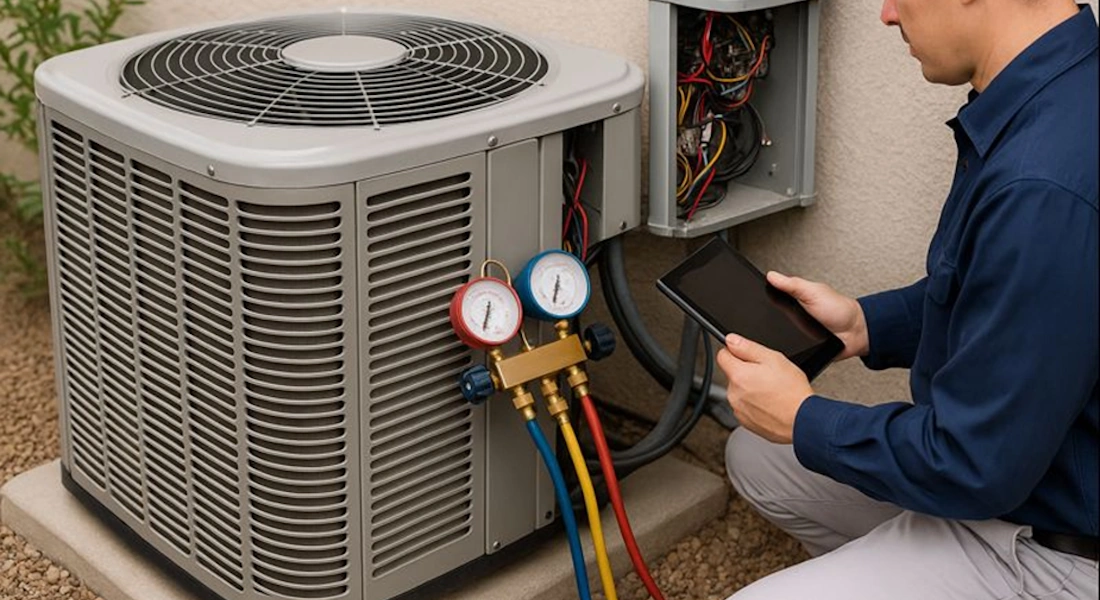
A heat pump cools the home like an air conditioner and can also provide heating by moving heat rather than relying only on combustion. In Southern Nevada, that can be a relevant replacement option for some homes, but the right choice depends on the existing heating system, electrical capacity, comfort preferences, equipment design and operating costs.
Useful when a homeowner wants one electric system to handle both cooling and heating. Variable-capacity models can also improve part-load comfort and reduce abrupt temperature swings.
Ductless heat pumps can be useful for additions, casitas, converted spaces or persistent problem rooms where extending or rebuilding central ductwork is impractical.
Do not recommend a heat pump just because incentives exist. Compare the home, existing fuel source, equipment cost, efficiency, controls, electrical needs and homeowner goals first.
Before a replacement is finalized, the duct system should be considered whenever there are signs of weak airflow, noisy returns, rooms that never match the thermostat, excessive static pressure, damaged flex duct, disconnected sections or large temperature differences from one area of the home to another.
That does not mean every AC replacement needs a complete duct redesign. It means the airflow side of the system should not be ignored. Depending on what is found, the project may include return-air improvements, duct repairs, balancing, filter-rack changes, register adjustments or other corrections that help the new equipment operate within its intended airflow range.
For homeowners also concerned about dust, filtration or airborne contaminants, the replacement visit is a logical time to review indoor air quality options. Equipment efficiency and indoor air quality are related to airflow, so they should be planned together rather than bolted on as an afterthought.

Summerlin includes everything from established single-story homes to newer luxury properties with multiple floors, casitas, expansive glass and separate comfort zones. The page should speak to those homes without pretending every house needs elaborate equipment.
If a home has two or more systems, replacing one unit requires checking how its capacity and controls relate to the zones it serves. The new system should not be selected in isolation from the rest of the home.
Zoning can make sense when different areas have meaningfully different loads or schedules. Variable-speed and inverter-driven equipment can also modulate output instead of operating only at full capacity.
Nest, ecobee, Honeywell and manufacturer-specific controls can provide scheduling, remote access and equipment staging. Compatibility should be verified before installation, especially with communicating systems.
For a simple single-system home, the best solution may still be straightforward single-stage equipment with good airflow and a properly configured thermostat. Premium does not mean complicated. It means designed around the home.
Confirm the home’s comfort issues, equipment space, electrical considerations, drainage, duct conditions, system capacity and efficiency options. Put model numbers and scope in writing.
Use floor and wall protection where equipment, tools or old components move through finished areas. Plan access before demolition begins.
Remove old equipment, set matched components, complete refrigerant, electrical, condensate and duct connections, and configure the thermostat or controls.
Verify operation, airflow, temperatures, controls and drainage. Review filter access, thermostat operation, warranty steps and maintenance expectations with the homeowner.
NV Energy currently lists a residential air-conditioning replacement offering for qualifying customers and replacement systems. The current program page says eligible central air conditioners must meet at least 15.2 SEER2, heat pumps at least 15.2 SEER2 / 7.8 HSPF2, and AHRI-certified ductless heat pumps at least 18 SEER2 / 9 HSPF2. Program rules also include customer, home, service-territory and contractor requirements.
Most importantly, the incentive is not something a homeowner should assume will appear after the installation. NV Energy says the approved installation company must be on its contractor list before the installation date, and the contractor/distributor channel handles the incentive as a line-item discount when the project qualifies. Program funding and requirements can change.
Comfort Masters should never promise an NV Energy incentive until the homeowner, equipment and contractor pathway have been verified for that specific project. Ask about current eligibility before equipment is ordered.
Comfort Masters’ current installation page lists York, American Standard, Lennox, Rheem, Trane, Carrier, Goodman and Amana. Brand matters, but model selection, matched components, installation quality, local support, parts availability and warranty terms matter just as much.
Warranty language should be taken from the written proposal and manufacturer documents. Do not rely on a generic “10-year” claim unless the exact coverage and conditions are stated.
A replacement is the right time to decide whether you want a basic programmable thermostat, smart thermostat, manufacturer communicating control, zoning panel or remote-access features. Some premium variable-capacity systems require specific controls to unlock full functionality.
Comfort Masters can also review heating-system compatibility when a new cooling system shares a furnace, air handler or control strategy with the home’s heat.
AC failure rarely schedules itself around the household budget. Comfort Masters offers financing options for qualified homeowners, so replacement cost can be evaluated alongside monthly-payment options rather than forcing a rushed decision based only on the first number.
Financing approval, rates and terms depend on the financing provider and applicant. The proposal should keep equipment price, any verified incentive and financing terms clearly separated so the homeowner can see what they are actually choosing.
Comfort Masters serves Summerlin homes with primary emphasis in 89134, 89135, 89138 and 89144, plus nearby Las Vegas Valley communities. Summerlin itself is defined by community boundaries rather than ZIP codes, so service and local references should be based on the actual address instead of implying that every property in a ZIP is inside Summerlin.
Homes near Downtown Summerlin, Summerlin West, Sun City Summerlin, The Vistas, The Paseos, The Ridges and other western-valley neighborhoods can have very different floor plans and system configurations. The installation page should stay focused on replacement decisions and system design, while the Summerlin HVAC hub carries the deeper neighborhood and service-area authority.
Start with the actual diagnosis. Replacement becomes more attractive when major repairs are recurring, reliability is declining, comfort remains poor, efficiency is low, or the system needs broader airflow and equipment changes. A modest repair on an otherwise healthy system may still be the better value.
Square footage is only one input. Proper sizing considers the home’s cooling load, orientation, insulation, windows, ceiling height, air leakage, occupancy and other heat gains. Existing duct capacity and airflow also need to support the selected equipment.
SEER2 is the current seasonal cooling-efficiency rating used for central air conditioners and heat pumps. It replaced the older SEER testing metric. A higher rating indicates greater standardized cooling efficiency, but installation quality and system matching still determine real-world performance.
No. The best choice depends on cooling load, expected runtime, budget, comfort goals, controls, ductwork and how long you expect to own the home. A correctly installed mid- or high-efficiency system can outperform a premium system that is poorly sized or installed.
AHRI certification can verify that specific indoor and outdoor equipment combinations have been tested and rated together. The AHRI reference information is useful when confirming capacity, SEER2 and other published performance values for the selected system.
Not automatically. Ductwork should be evaluated when there are airflow restrictions, major leaks, damaged sections, noisy returns, high static pressure or persistent hot rooms. Corrections should be targeted to what the system actually needs.
Yes, heat pumps are a legitimate option in Southern Nevada and can provide both cooling and heating. Whether one makes sense for your home depends on the existing heating setup, electrical capacity, equipment selection, operating preferences and project economics.
Yes, when the equipment and duct design support it. Zoning and smart controls are especially worth evaluating in multi-story homes, homes with separate living areas or properties with rooms that have very different cooling loads.
NV Energy currently publishes a residential replacement incentive program with equipment-efficiency, customer, home, service-territory and contractor requirements. Eligibility must be verified before installation. Do not assume a system qualifies until the current program rules and contractor status are confirmed.
The current Comfort Masters installation page lists York, American Standard, Lennox, Rheem, Trane, Carrier, Goodman and Amana. The right choice depends on the model, matched components, comfort goals, service support and warranty terms rather than the logo alone.
Coverage varies by manufacturer, model, registration requirements and the written installation proposal. Before approving the project, confirm parts coverage, labor or installation coverage, registration deadlines and maintenance requirements in writing.
Comfort Masters advertises 24/7 HVAC support. If your system stops cooling, call (702) 869-8093. Availability and scheduling depend on current demand, so this page should not promise an unverified arrival time.
Get a clear diagnosis, a properly specified system, written equipment details and an installation plan built around your home instead of a one-size-fits-all sales package.